
Ventilation
We design, install and maintain Ventilation systems
Building ventilation systems are designed to provide a continuous supply of fresh air while removing stale, contaminated, or temperature-controlled air from a building. They help maintain indoor air quality, control temperature and humidity, and ensure occupant comfort.
1. Fresh Air Intake
Outside air is drawn into the system through external louvres or intake grilles. This air is often filtered immediately to remove:
- Dust
- Pollen
- Pollution particles
- Insects and debris
2. Air Filtration
The incoming air passes through a series of filters:
- Coarse filters for larger particles
- Fine filters for improved air quality
- HEPA filters (where required in healthcare or clean environments)
3. Air Treatment
Within an Air Handling Unit (AHU), the air can be:
- Heated during winter
- Cooled during summer
- Humidified if air is too dry
- Dehumidified if air is too humid
This ensures the supply air reaches the desired temperature and comfort level.
4. Air Distribution
Fans within the AHU push conditioned air through a network of ductwork to occupied spaces such as:
- Offices
- Retail units
- Restaurants
- Schools
- Hospitals
- Factories
Air is delivered through ceiling diffusers, grilles, or vents.
5. Air Extraction
Stale air containing:
- CO₂
- Odours
- Heat
- Moisture
- Airborne contaminants
is extracted from the building through return grilles and ductwork.
6. Heat Recovery (Modern Systems)
Many modern ventilation systems include a Heat Recovery Unit (HRU) or Heat Recovery Ventilator (HRV).
Commercial Buildings
For larger commercial properties, ventilation is typically provided by an Air Handling Unit (AHU). The AHU supplies fresh conditioned air through ductwork while extracting stale air. Modern systems are often integrated with:
- Air conditioning
- Heating systems
- Building Management Systems (BMS)
- CO₂ monitoring
- Occupancy sensors
Benefits of Good Ventilation
- Improved indoor air quality
- Reduced CO₂ levels
- Better occupant comfort
- Lower risk of condensation and mould
- Reduced spread of airborne contaminants
- Improved energy efficiency when heat recovery is used
- Compliance with UK Building Regulations and workplace requirements
For commercial buildings such as offices, surgeries, retail spaces, restaurants, sports venues, and factories, a balanced ventilation system with heat recovery is typically the most energy-efficient and effective solution.
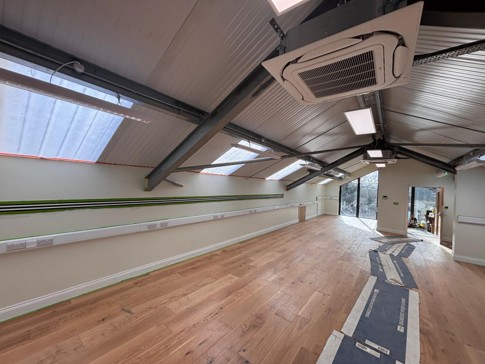
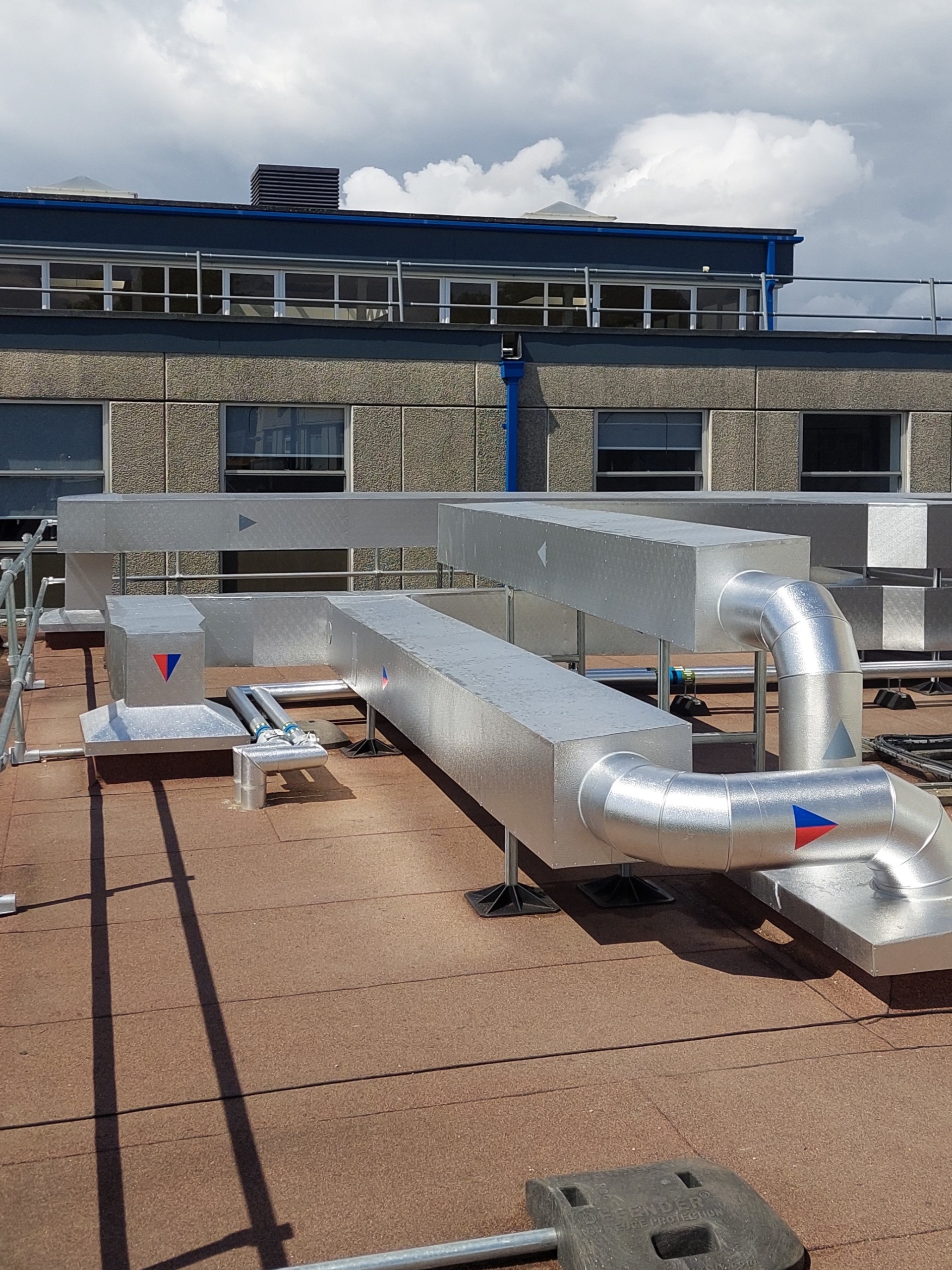
Recent Case Studies


What our clients say
Terry Wicks (superstar). Terry has been very helpful over the last week. He popped into Lavington Street each morning to check the system. He made changes to see if we could right the wrong. He explains everything in a language that I understand. In other words, he doesn’t blind you with science. Terry is also a lovely chap and an asset to your team.
The way your team have applied themselves and delivered over the past 18 months is second to none and this has only reinforced the relationship. It has also given me kudos as I brought you in, so thank you. I know that Peter and Danny are both new employees but whoever is doing the recruitment needs a huge pat on the back. They have been incredible. Technically, attitude, application are all top draw. They really are (after 1 month) the go-to guys on site. Feedback from colleagues, staff and students has been positive in regards to reaction times and job done first time.
Greig has done a great job on the monthly report and we spoke with all parties on our to keep the system working as efficiently and raise any concerns at the earliest opportunity. Please say a special thanks to Greig for his desire to make sure the Planet PPM system works as well as possible to not only achieve the SLA’s but also as a system to make sure we have a reliable and robust record of the good work we carry out on a month to month basis.