


SK Refrigeration Pioneering Adoption of Opteon™XL40
Walsh Mushrooms Group is one of the largest suppliers of fresh mushrooms and substrate in Ireland and the UK. They are a vertically integrated food business, each week supplying over 500 tonnes of fresh mushrooms to the UK marketplace, growing over 150 tonnes of fresh mushrooms in Ireland and the UK and producing close to 2,000 tonnes of substrate for Ireland and the UK market.
Their Head Office is located in Gorey Co Wexford where they have manufactured their substrate for nearly 40 years.
Walsh have growing and packing operations in Golden Co Tipperary, in Bury St Edmunds, Suffolk and in Evesham, Worcestershire.
Employing close to 400 people across the 4 sites and the group has grown rapidly over the last 5 years.
Walsh Mushrooms clean and process approximately 250 pallets of fresh mushrooms per day, prior to dispatch to retail and hospitality trade.
Priorities are efficient process and product quality.
Walsh Mushrooms Evesham
By D Sowden F.InstR
Technical Marketing Specialist
Chemours UK Ltd
Contractor Brief
“Walsh mushrooms are a service / maintenance contract holder with SK Refrigeration and Heating Ltd
Owing to the existing equipment regularly breaking down due to age and condition.
R22 Refrigerant alternatives becoming harder to obtain or costed at £75 – £100 a Kilo (and with a significantly high GWP), the Customer requested options for replacement moving forward.
They were also wanting a solution or refrigerant that would be somewhat future proof with the ever-increasing pressure on GWP and quota.” – Matt Dolphin (Director SK Refrigeration)
Objective of Case Study
To demonstrate the practical application of large charge sizes of A2L refrigerants in large commercial cold storage, whilst maintaining compliance with EN378 and PED / PES(R)
Executive Summary
Today it is well known that the pressure on refrigerants from F-Gas regulations and the drive to reduce carbon dioxide equivalents (CO2eq) will require systems to be designed with Low Global Warming Potential (LGWP) refrigerants in mind. Failure to do so will result in quota levels severely limiting the amount of refrigerant available for new installs and maintenance, as High GWP refrigerants will use a disproportionate amount of quota, and will consequently be very expensive.
Today the plan is to further reduce quota by 69% from the 2015 baseline in 2024.
Add to this the possibility of:
- Additional cuts to quota in 2024 as proposed by the F-Gas review.
- The expected exponential increase in Heat Pump installations in the UK/EU .
- The inclusion of Metered Dose Inhalers requirements into the quota
From this it is clear that our industry has to rapidly adapt, and adopt LGWP solutions.
Global events in 2022 have added further pressure on the choice of refrigerants available both through the cost and supply of energy and the Actual Global Warming (GWA) impact of the energy consumed including the percentage of fossil fuels used to generate this power.
Consideration of Direct Emissions (Refrigerant Leakage), Indirect (Emissions from Power Supply) and Increasing Energy Costs are now more important than ever when deciding on equipment specification.
Lower GWP refrigerants are a recognized and important alternative to HFC’s and “Industrial Natural” refrigerants when considered as an Holistic Solution to the pressures on our industry and society.
Opteon™ refrigerants are a LGWP and energy efficient HFO/HFC blend and provide sufficient performance to replace legacy and interim replacements but with a GWP significantly lower.
With a GWP of just 238, Opteon™ XL40 is expected to be sustainable with respect to the CO2eq phasedown and therefore a good choice to replace these interim refrigerants. Furthermore, the refrigerants characteristics allow for large installations such as industrial cold storage, whilst continuing to meet the requirements of EN-378 Safety Standard.
Client Considerations and Concerns
Sustainability / Capex / Opex / Proofing / Ease of maintenance (System Architecture) / End user aspirations for Green agenda strategy.
Alternative solutions considered:
CO2 Rejected due to:
- Capital Cost of equipment and installation.
- High Energy Costs (High Cost of ownership)
- The high value of product stored and the loss of product or quality proved to be too high a risk in the event of CO2 charge loss due to high ambient temperatures.
- Risk in the event that there are repeated CO2 shortages.
NH3 Rejected due to:
- High Capital Cost
- System Complexity in this market
- Higher Operating Costs
- B2L refrigerant – Toxicity
- High Maintenance Cost
Solution Adopted:
A2L Opteon™XL40 (240kg Total)
- Acceptable Capital Cost
- Lower Operating Costs using energy efficient refrigerants
- Lower Environmental impact due to Low Energy Consumption in a Fossil Fuel Rich Energy Supply Chain.
- Familiar System architecture and easily maintained
- Confidence in Product Quality
Legacy Plant
20 year old pack with 3x compressors suppling 3x Coolers & Condensers per hall.
The pack was initially installed with an R22 charge and later upgraded to R-422D (Freon™MO29).
Total Charge 250kg.
The compressors have also been changed out over the years and replaced with re-manufactured semi hermetic compressors.
New Installation
Conditions
Hall1 = +4C Hall2 = +6C
Evaporator Temp -5°C
Condensing Temp 40°C
Subcooling 2K
Total Superheat 25K
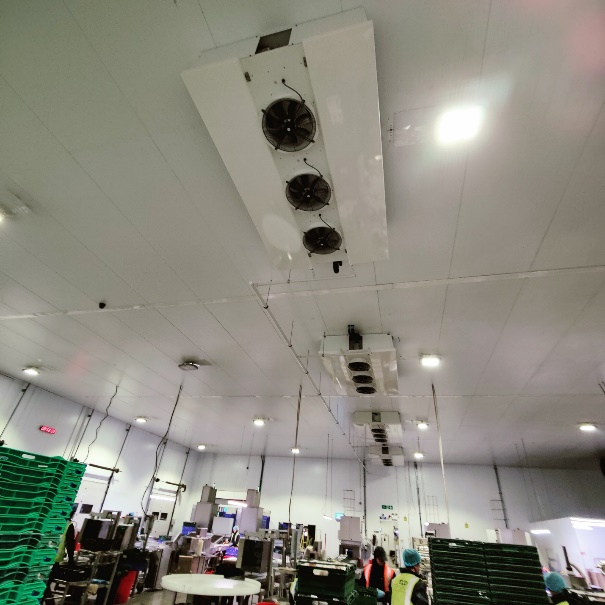
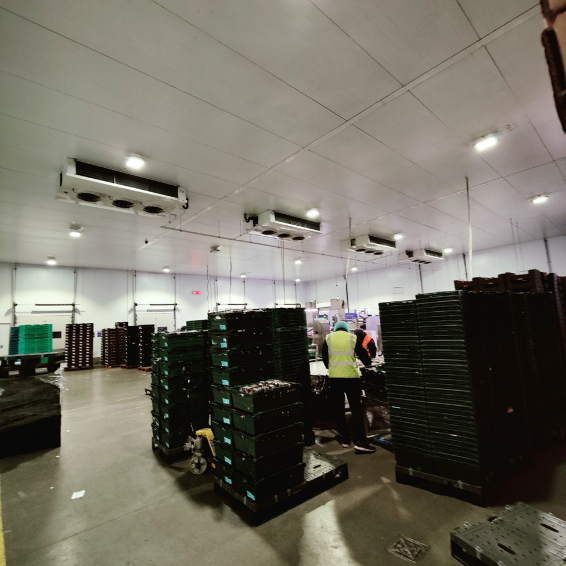
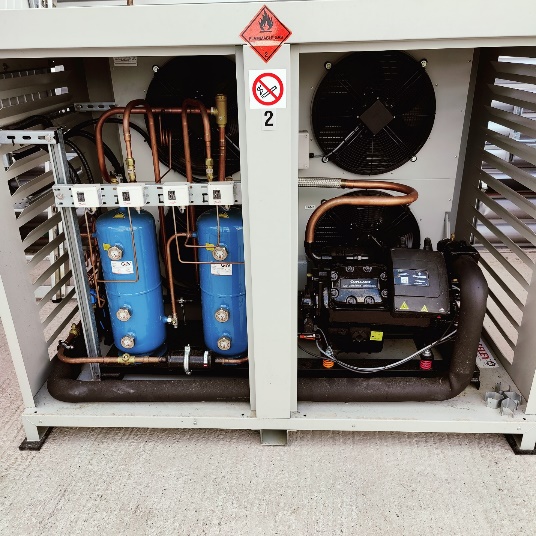
4 circuits 60kg Per Circuit R-454A Opteon™XL40 (240kg Total) Supplying 2 halls.
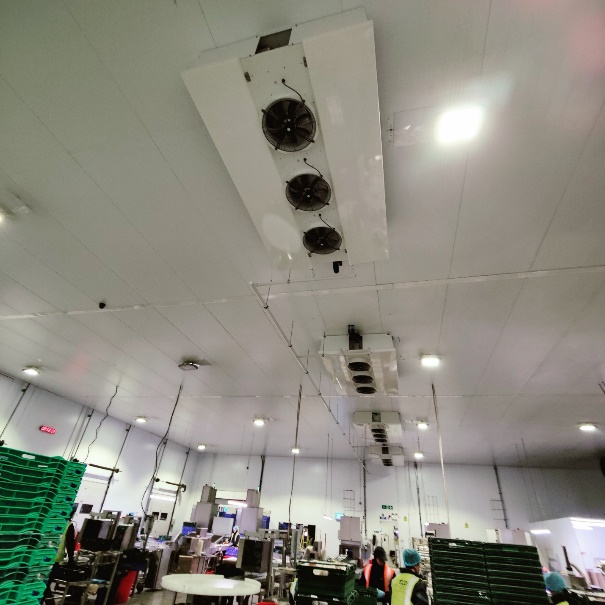
8 off Evaporators supplied by Kelvion (CDK-453-8BE-FX28)
Controllers – Temp controllers Eliwell ID985LX , Danfoss Superheat controllers EKE 1C
Total Charge 240kg.
Halls 1 & 2 have the same sized equipment delivering 95kW of cooling duty per hall
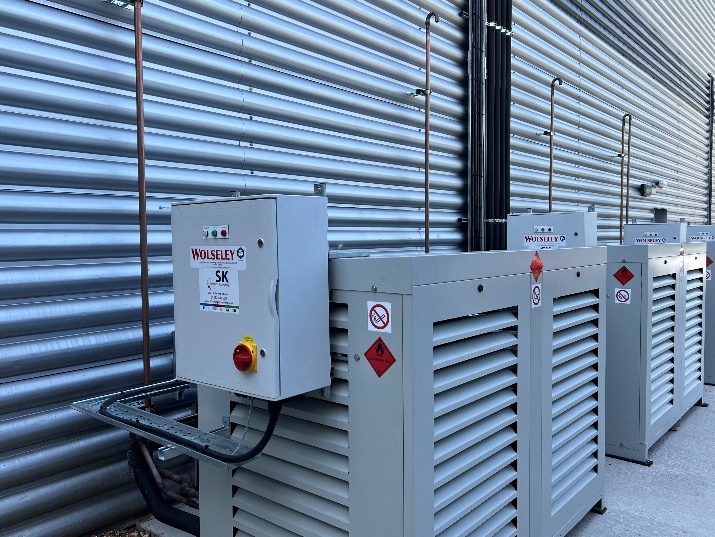
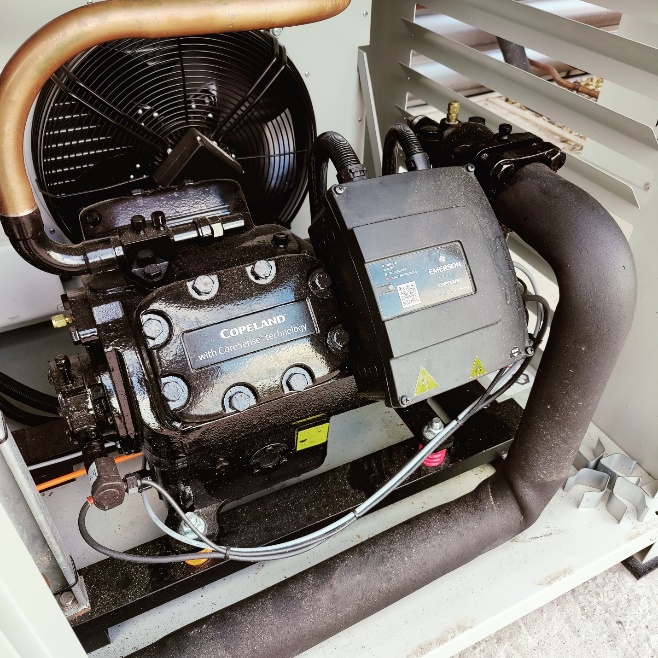
The Evaporators are supplied by four Bespoke Condensing Units Powered by Copeland Stream Semi Hermetic Compressors.
Each condensing unit having been designed, qualified and certified for use with A2L refrigerants by Peter Woods F.InstR Technical Director at Wolseley Custom Build
The units are UKCA labelled.
Performance and Major Findings
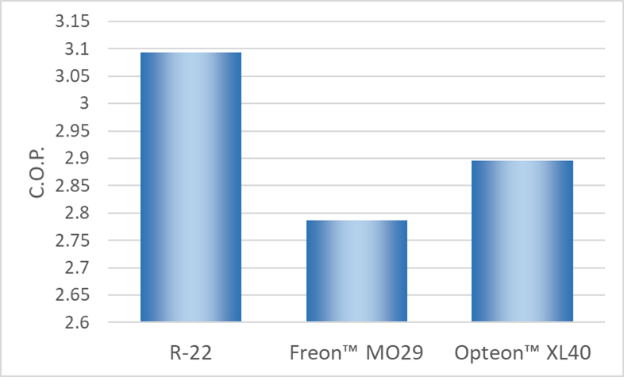
A like for like assessment against the legacy system would not give a fair representation due to its age and level of deterioration. Instead a comparison was made using the characteristics of the new condensing units against both the new and old refrigerant properties to show results on a comparable basis.
Figures are per circuit.
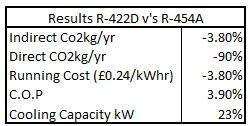
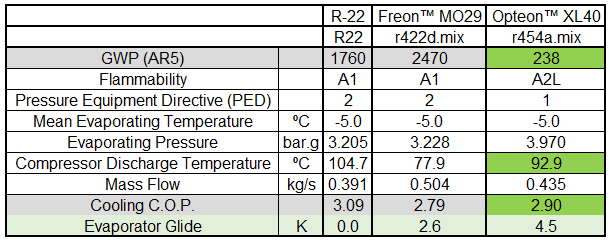
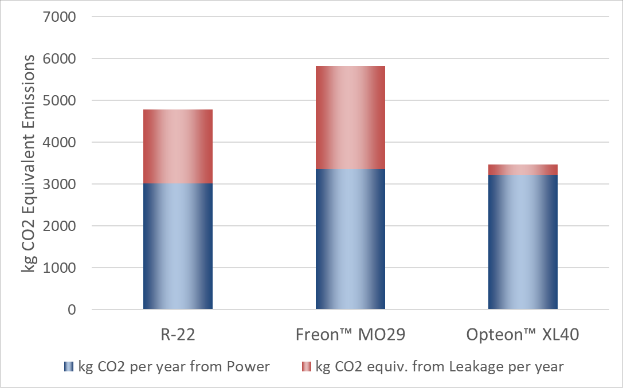
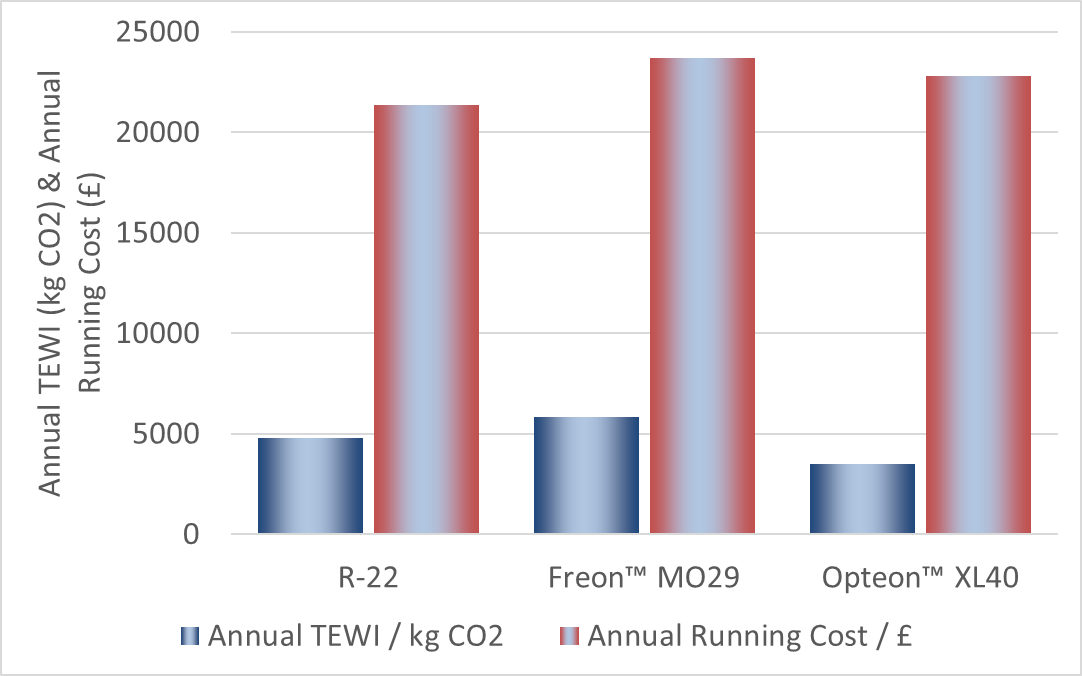
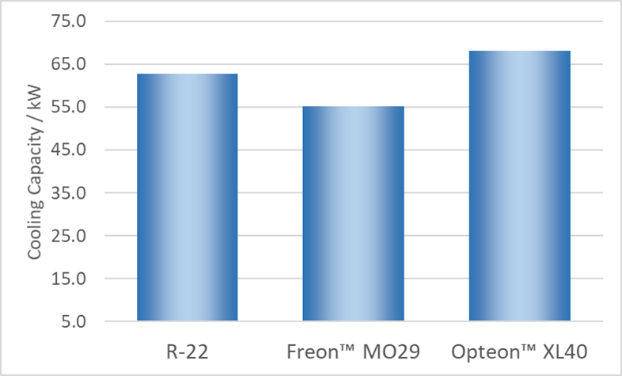
Savings in direct and indirect emissions over predicted lifetime of 15 years
Direct CO2 33.5 Tonnes Per Circuit (134 Tonnes Total)
Indirect CO2 5 Tonnes Per Circuit (20 Tonnes Total)
Cost £13,500 Per Circuit (£54,000 Total)
Conclusions
Large charge sizes are possible due to Access Category and Room Size.
A full risk assessment is required as with any other installation and was carried out prior to commencing with the project.
Choice of Refrigerant and partners resulted in both CapEx and TCO being very acceptable.
Projects of this type are not only possible, but also proven to be scalable and repeatable within the confines of standards and regulations and provide an excellent, safe and environmental solution to this part of the cold chain.
Share This Story!
Do you have an upcoming project or tender? Then please complete the form below.